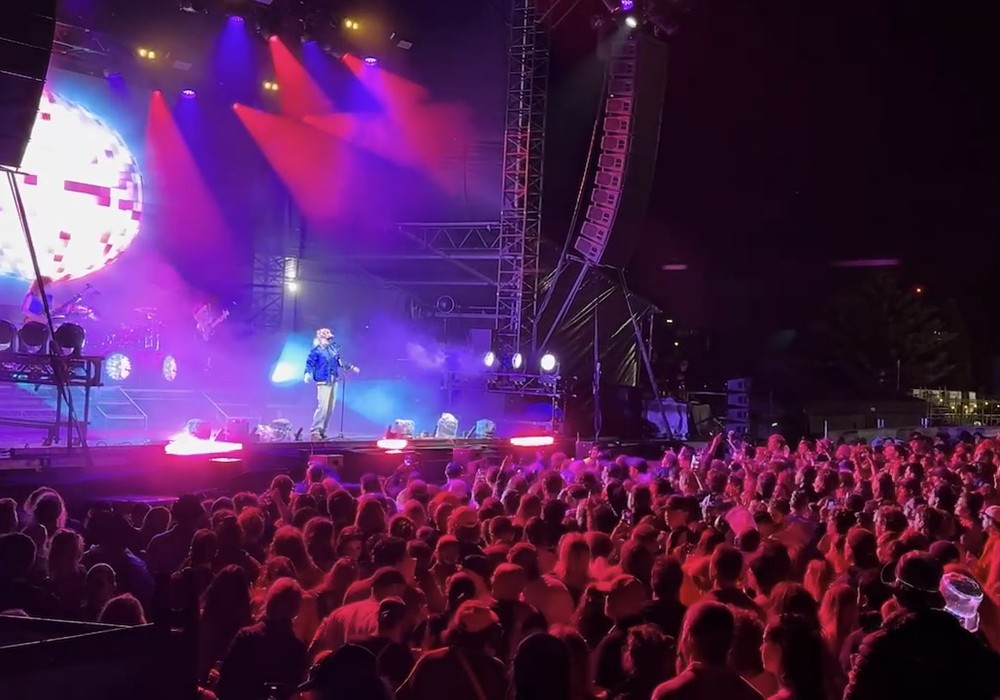
Live Nation has posted third quarter revenue of US$10.1 billion, up 19% on the same period last year, with global fan attendance rising 19% to 61 million. International markets grew attendance by 29% compared with 13% in North America, and have now overtaken the US for concert attendance and sponsorship revenue for the year to date.
Operating income was US$892 million, up 13%, and adjusted operating income rose 14% to US$1.18 billion. The company has sold 170 million tickets through October and expects close to 180 million fans across 2026. It plans to open or acquire about 10 large venues of 3,000 capacity or more by the end of the year, with capital spending of nearly US$1.1 billion. A US$450 million charge for governmental investigations and litigation sits outside the adjusted figures and pulled nine month operating income down 25% to US$1.04 billion.
How the other big players are tracking
CTS Eventim, the European ticketing and live entertainment giant, reported first half revenue of 1.513 billion euros, up 16.9%, with adjusted EBITDA up 12.4% to 225.4 million euros. Its live entertainment arm grew revenue 18.6% to 1.061 billion euros and lifted adjusted EBITDA 57.1% to 52.9 million euros, while ticketing revenue rose 13.9% to 473.3 million euros. The board kept its full year forecast.
Madison Square Garden Entertainment recorded revenue of US$246.3 million for its March 2026 quarter, up 2%, although adjusted operating income fell 20% to US$46.0 million. Across the first nine months of its fiscal year, revenue rose 10% to US$864.5 million and adjusted operating income rose 9% to US$243.5 million.
TEG, the parent company of Ticketek, does not publish revenue figures, but it has reportedly started a restructure under new CEO Cameron Hoy after losing the Venues NSW ticketing contract to Ticketmaster and the Melbourne Parks contract to AXS. About 42 roles in Australia are expected to go, roughly 5.5% of the workforce, and TEG is owned by private equity firm Silver Lake.
The numbers show the money and the growth sitting with the largest operators, with international markets now the main driver for Live Nation. This is backed up by recent reports from Live Performance Australia and APRA AMCOS, both showing huge income generation focussed around the top end of the market.
The Same Picture In Australia
Live Performance Australia’s latest attendance and revenue report shows ticket revenue sitting at A$3.4 billion in 2025, down just 0.1 per cent on the year before, with ticketed attendance easing 2.4 per cent to 30.7 million. Both figures are the second highest since the report began in 2004.
Contemporary music carried much of the load, with concerts and festivals making up more than 65 per cent of total revenue and more than 51 per cent of attendance. Concerts brought in almost A$1.8 billion from 13.7 million guest attendances, close to the record set in 2024. Festival revenue rose 20.7 per cent to A$399.9 million, helped along by an average festival ticket price that climbed 14.1 per cent to A$206.17.
Much of the headline result comes from stadiums, arenas and big international tours, and governments of every level continue to back that end of the market. The Queensland Government temporarily lifted the concert cap at Suncorp Stadium from 12 to 21 shows for 2026 to attract more global tours as part of its Destination 2045 tourism strategy. In Western Australia, government documents obtained by The Guardian showed the state paid Live Nation A$8 million to secure two exclusive Coldplay concerts at Optus Stadium in November 2023, and further Guardian reporting found Live Nation Australia and its subsidiaries had received more than A$24 million in federal and state government grants since COVID.
Bottom End Feeling The Pinch
Whilst the top end of the market appears to be smooth sailing and increasing profits, all indications from the rest of the industry, show difficult times, with low and late ticket sales, shrinking profit margins and increased costs.
Support for the grassroots end of the industry runs on much smaller numbers. The federal Revive Live program is sharing A$11.6 million in 2025-26 between 59 music festivals and 46 live music venues around the country, within a commitment of A$25 million over two years. That is only a little more than Western Australia put into two nights of Coldplay, spread across 105 businesses nationally.
The small and medium venues that develop Australian artists have been closing steadily for years. APRA AMCOS reported in 2023 that more than 1,300 live music venues and stages had been lost permanently since pandemic restrictions began, shrinking the small to medium gig circuit by around a third. Closures have continued through 2026, including Sydney’s Mary’s Underground, which shut on 30 June after seven years and more than 1,000 shows. Its owners blamed falling bar sales, rising costs and Sydney land values, and said venues under 500 capacity are facing the toughest conditions in the industry.
Artists are carrying the same pressure. Music Australia’s first Bass Line report found the median Australian music artist earned just A$14,700 in 2023-24, with the top 25 per cent of earners taking around 82 per cent of all artist income. Live music made up 48 per cent of what artists earned, so every lost venue and cancelled gig hits their income directly.
This increasing margin between major companies and small business is paralleled across IT, tech, agriculture, retail and more with global reports matching news from the Australian market.
The ALMBC has been listening to our members and will continue advocating to government for more equitable systems to support grass roots live music businesses.