Queensland’s Nightlife Plan Delivers Wins on Precincts and Red Tape, But Falls Short on Youth Engagement
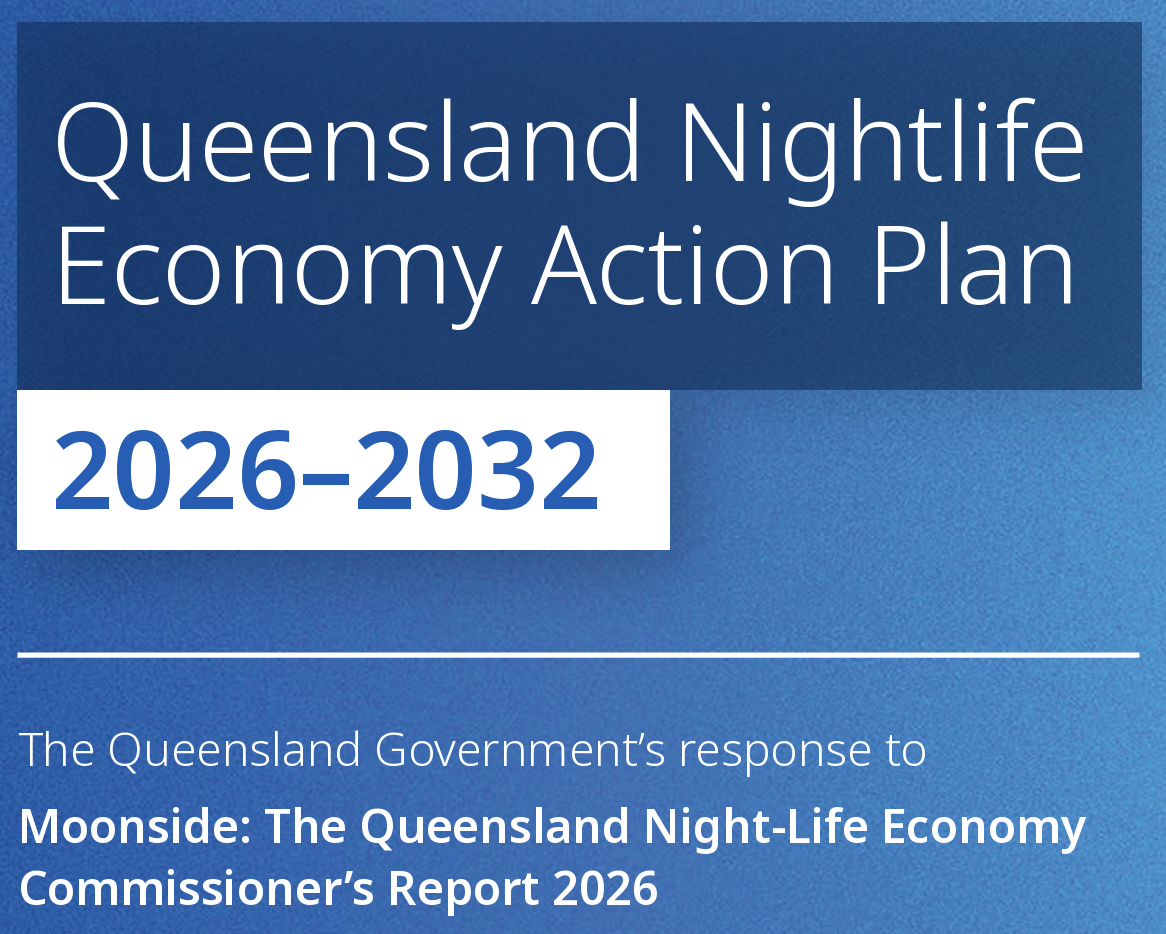
Queensland’s first Nightlife Economy Action Plan has been unveiled, marking the State’s most significant commitment yet to growing the night-time economy ahead of the Brisbane 2032 Olympic and Paralympic Games. The plan adopts many recommendations from Night-Life Economy Commissioner John “JC” Collins’ Moonside report, particularly around entertainment precincts, live music and reducing regulatory barriers for operators.
For local governments and communities, one of the most important announcements is the Government’s backing of Special Entertainment Precincts (SEPs) as a key tool for building vibrant local nightlife districts. The Action Plan commits to encouraging councils to establish SEPs, supported by a new Nightlife Playbook and activation programs designed to improve streetscapes, public spaces and local economic activity.
SEPs are already available under Queensland legislation but remain underutilised. They provide a mechanism for councils to better manage entertainment noise and protect music and hospitality venues from future residential encroachment. The Commissioner’s report identified wider SEP adoption as one of the most practical ways to encourage investment and give businesses greater confidence to operate and grow.
Cutting Red Tape for Venues
The Government has also committed to a series of liquor licensing reforms aimed at reducing regulatory complexity.
Key measures include:
- A new framework for declared special event days, allowing easier access to temporary extended trading arrangements during major events and regional festivals.
- Modernisation of the extended trading hours permit process, including removing “special occasion” requirements and allowing permits on consecutive days.
- Streamlining approvals for renovations, venue alterations and short-term licences.
- Better coordination between councils and the Office of Liquor and Gaming Regulation.
- Progress toward a centralised online liquor licensing application system.
These reforms respond directly to concerns raised during the Commissioner’s statewide consultation, where venue operators described Queensland’s licensing framework as complex, compliance-heavy and costly compared with other jurisdictions.
Learning from Other States
The Commissioner’s report noted that Queensland has lagged behind states such as New South Wales and Victoria in several areas of nightlife regulation. New South Wales already allows external advertising of liquor prices, provides stronger “agent of change” protections for venues, has more flexible trading arrangements and has implemented Purple Flag-accredited entertainment precincts through the 24-Hour Economy Commissioner’s office.
While Queensland’s Action Plan narrows this gap, it stops short of some of the more ambitious reforms proposed in Moonside. For example, the Government rejected recommendations for a broader risk-based liquor licensing framework, fast-tracked approvals for low-risk venues and major changes to ID-scanning requirements.
The result is a policy package that seeks to make nightlife more vibrant while maintaining Queensland’s existing safety-focused approach. The Government has confirmed it will retain Safe Night Precincts, mandatory ID scanning and Jack’s Law knife-wanding provisions.
Boost for Live Music
The strongest alignment between the Government and the Commissioner appears to be around live music.
The plan includes:
- A new “Homegrown” policy to create opportunities for Queensland artists to perform alongside major touring acts.
- Expansion of the Queensland on Tour initiative to support regional touring and connect artists with venues.
- Consideration of discounted liquor licence fees for grassroots live music venues.
- Recognition and support for culturally significant venues.
These measures bring Queensland closer to approaches already being used in NSW and other jurisdictions to protect grassroots music ecosystems and grow local talent pathways.
A Missed Opportunity on Young People
One of the more notable omissions from the final Action Plan involves youth engagement.
The Commissioner recommended:
- Reviewing requirements for all-ages events.
- Creating incentives to encourage 16–25-year-olds to attend grassroots live music performances and cultural events.
- Reducing barriers preventing younger audiences from participating in the nightlife economy.
However, the Government declined both the recommendation to review all-ages event requirements and the proposal for youth attendance incentives.
This is despite the Commissioner’s consultation finding that younger Queenslanders identified affordability, live music opportunities, cultural activities and transport as major factors influencing their participation in nightlife.
For many in the sector, this is likely to remain an area for future advocacy as Queensland looks to build the next generation of audiences for live music, arts and cultural events.
What It Means for Local Government
For councils, the Action Plan places significant emphasis on local leadership.
New opportunities include:
- Exploring Special Entertainment Precincts.
- Activating underutilised public spaces.
- Supporting outdoor dining, parklets and temporary activations.
- Accessing funding through the proposed Nightlife Precinct Activation Program.
- Embedding nightlife principles into precinct planning and master planning ahead of 2032.
The overall message is clear: Queensland is moving towards a more modern nightlife policy framework, with local governments expected to play a central role in delivering vibrant, safe and economically productive night-time precincts.
While the Action Plan does not deliver every reform sought by industry, it represents a significant shift towards precinct activation, live music support and reduced regulatory burden — and could be particularly transformative for councils prepared to leverage Special Entertainment Precincts and place-based activation initiatives.