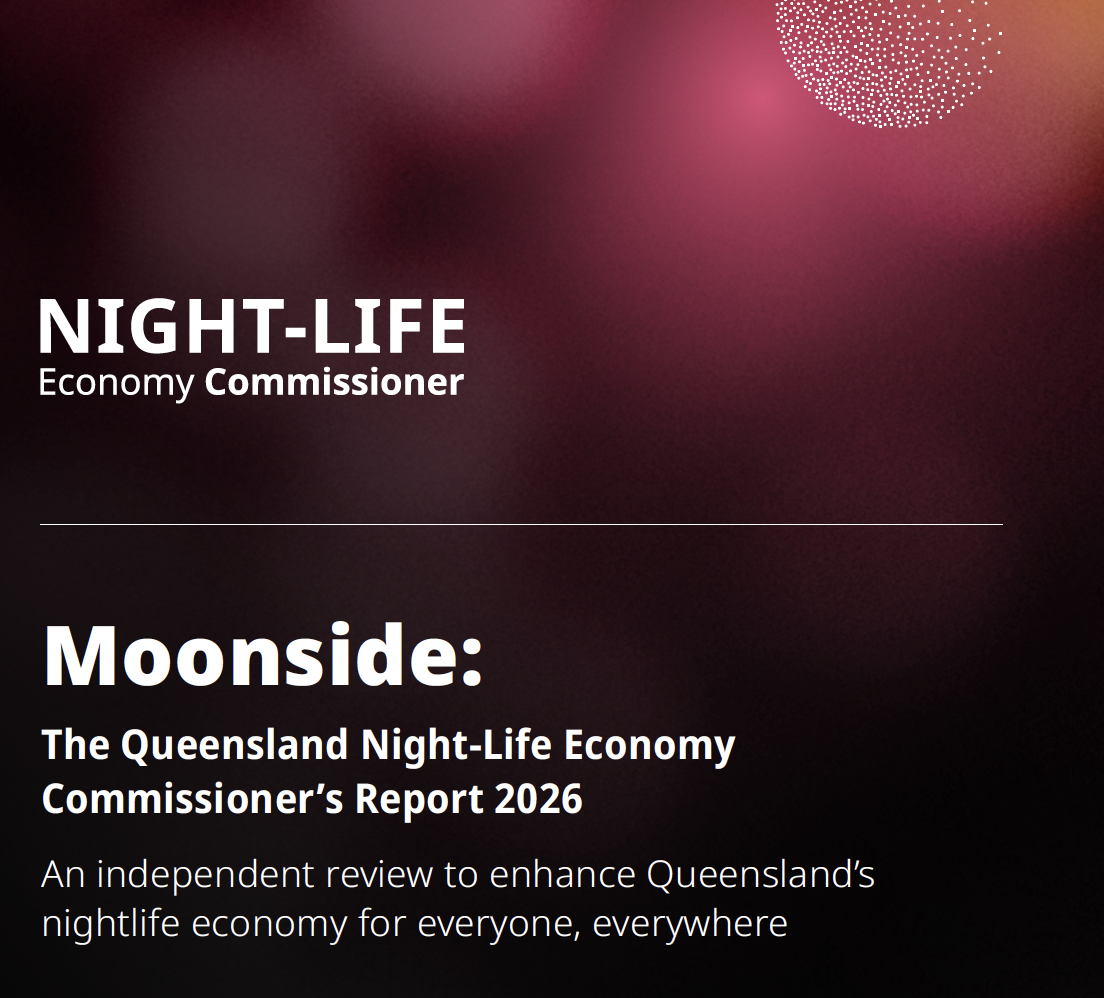
Queensland Night-life Commissioner Pushes to Cut Nightlife Red Tape and Bring Young People Back After Dark
Queensland’s Night-Life Economy Commissioner has called for major reforms to revive the state’s after-dark economy, with a new report arguing that excessive regulation, rising costs and limited flexibility are holding back nightlife growth ahead of the 2032 Olympic and Paralympic Games.
The Moonside Report recommends reducing red tape for hospitality, entertainment and live music venues through streamlined licensing, simplified event approvals, expanded trading opportunities and a stronger risk-based regulatory approach. It argues businesses are facing growing pressure from insurance, wages, electricity costs and complex compliance requirements.
A key recommendation is greater use of Special Entertainment Precincts (SEPs), which provide planning and noise-management protections designed to support established entertainment venues and encourage investment in nightlife districts. The report says councils should be supported to create more SEPs to boost business confidence, protect venues and help develop vibrant cultural precincts across Queensland.
The Commissioner is also seeking stronger “first-in” protections, ensuring new residential developments near existing entertainment venues recognise and accommodate those venues, rather than creating future operational conflicts.
Young people featured heavily in the consultation process. The report found cost-of-living pressures and safety concerns were the biggest barriers preventing younger Queenslanders from participating in nightlife activities. More affordable entertainment, better late-night transport and increased access to live music and cultural events were identified as the leading ways to encourage greater participation.
Among the proposed reforms are incentives for people aged 16–25 to attend grassroots live music venues and theatres, simpler approval pathways for all-ages events, and expanded support for local artists and touring opportunities.
The report also advocates for reducing compliance costs by modernising liquor licensing, streamlining approvals for venue alterations and renovations, introducing a centralised licensing system, simplifying outdoor dining applications and creating an end-to-end concierge service to help businesses navigate government requirements.
According to the report, Queensland’s nightlife economy already supports more than 238,000 jobs and generates approximately $37.6 billion in annual turnover, highlighting its importance not only as a cultural asset but as a major economic driver for the state.